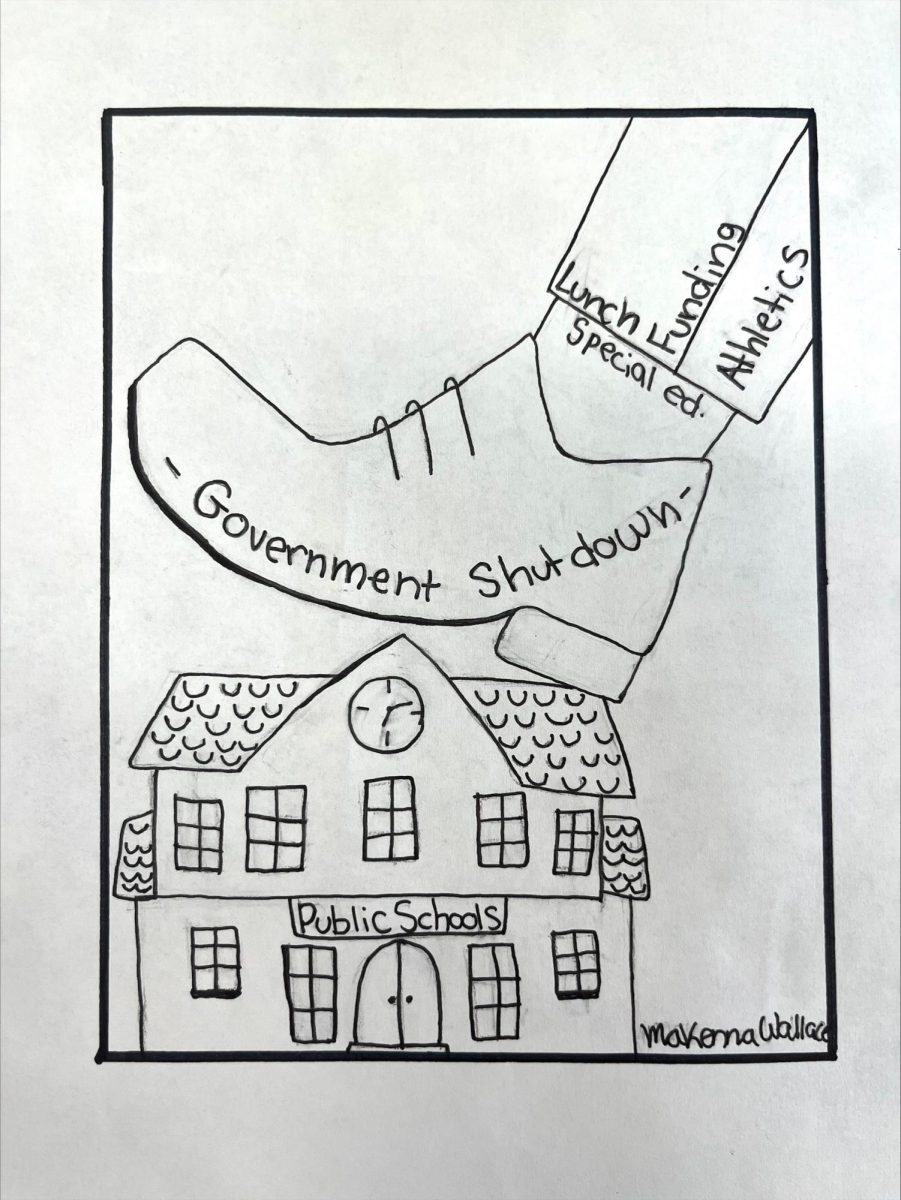
Due to not being able to pass a budget bill until Nov. 12, the federal government recently experienced the longest government shutdown the United States has ever had. This shutdown affected things like jobs for federal workers, funding and schools.
According to Milton Business Administrator Mr. Derrek Fink, the school district receives a set amount of money from both the federal government and the state government. The stop of federal funding sets Milton back anywhere from one to three percent of the district’s collective funds.
“Though the federal government shutting down has very little impact, there are schools around us that could be very heavily impacted. No school’s funding looks the exact same,” said Mr. Fink.
Of more consequence was the state’s budget impasse which ended Dec. 3. The state funding stop set Milton back 25 percent of the school’s revenues. Comparatively the state provides $22 million in revenue, and the federal government provides maybe $1 million, according to Mr. Fink.
Mr. Fink added there were concerns that the federal funding to our school would never come back or wouldn’t be the same, but since the shut down has ended all funding from state and federal have been fully restored with no problems.
Milton Superintendent Dr. John Bickhart said Milton has a fund balance, which is a fund that acts as an emergency fund. The fund has money stored to gain interest and allows the school to have back up money if needed for bills, payroll and other necessities.
According to Dr. Bickhart, the school had to use the balance fund due to the government shut down. The fund started at just under $8 million before the shut down and near the end of the shut down it was at $2 million.
“Our school’s plan to keep everything running (was) only using the fund for essential funding” in November before the budgets were settled, Dr. Bickhart added.
According to both Mr. Fink and Dr. Bickhart, some examples of essential spending would be payroll, bills, school lunches, sports, clubs and field trips.
“Running this school is like running a house: you worry about your bills, and food and then other extra things. It’s necessity spending,” said Dr. Bickhart.
Mr. Fink explained that things like school lunches and special education teachers weren’t being funded due to the federal government shutdown.
If the balance fund were to run out before the government shutdown ended, then the school district would have had to borrow money from a bank to keep the absolute necessities for the school district like payroll, bills and lunches, according to Mr. Fink and Dr. Bickhart.
But borrowing money from the bank would have set an interest fee anywhere from $100,000 to $250,000, Mr. Fink added.
Dr. Bickhart said that the district would have borrowed money from the bank because he wanted the students in the district to keep a sense of normalcy.
According to Mr. Fink, the school should only take a month to have a return to normal. Mr. Fink said there were no long term changes to programs, staffing or services from the shut down that occurred. The district had planned ahead and kept a balance fund with extra money for if something like the shut down were to happen and it minimized the impact that students and staff received, he added.
“Shutdowns can create short-term challenges, such as delayed reimbursements or additional administrative work to catch up on reporting and payments.“ added Mr. Fink.